
Overwhelmed? The Problem Might Not Be Your Workload.
Summary: The instinctive response to overwhelm is to work harder. Yet the harder we push, the less clearly we often think. When priorities blur and everything feels important, we risk becoming busy without being effective. This article examines why overwhelm is often a clarity problem rather than a workload problem, and offers practical steps to help you focus on what matters most.

When work feels relentless, the instinct is often to work harder. But what if the real problem isn't the amount of work on your plate, but a loss of clarity about what matters most?
Does this sound familiar?
You've got so much to do that you're already thinking about how you can cram in a bit more tomorrow. Maybe you'll get up an hour earlier. Perhaps you'll work through lunch. You briefly consider cancelling dinner with friends because surely a few extra hours would help you get on top of things.
Most of us have been there.
The problem is that when overwhelm strikes, we tend to respond in exactly the wrong way. We push harder. We work longer. We try to squeeze more into the day.
And while that might help in the short term, it often makes the underlying problem worse.
The irony is that the harder we push, the less effective we become. The clarity we need to prioritise, make good decisions, solve problems, and lead others starts to erode under the very pressure we're trying to manage.
That's why overwhelm is often less of a workload problem and more of a clarity problem.
When we're overloaded, everything starts to feel important. We jump from task to task, react to the latest request, and spend our days putting out fires. The ability to step back, think strategically, and focus on what will make the biggest difference gradually disappears.
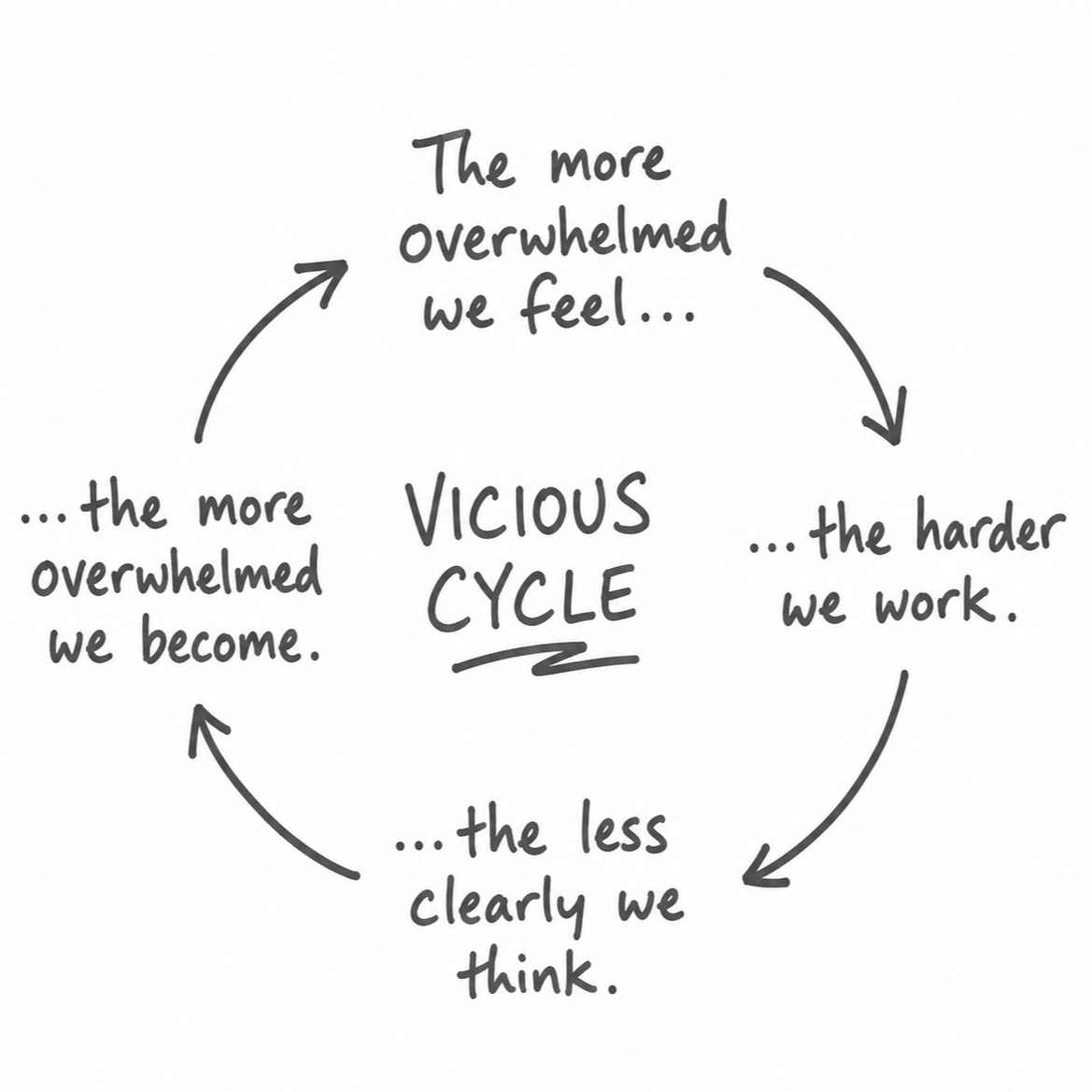
It's a vicious cycle. The more overwhelmed we feel, the harder we work. The harder we work, the less clearly we think. And the less clearly we think, the more overwhelmed we become.
Five Signs You May Be Losing Clarity
Overwhelm doesn't always announce itself dramatically. More often, it shows up in small ways that are easy to overlook.
Everything feels urgent: You struggle to distinguish between what is genuinely important and what is simply demanding your attention.
You're constantly busy but not making meaningful progress: Your days are full, yet the work that really matters never seems to move forward.
Decision-making feels harder than usual: Choices that would normally be straightforward suddenly require far more energy and thought.
More hours have become your default solution: Instead of changing priorities or ways of working, you automatically try to create more time.
You can no longer switch off: Even when you're away from your desk, your mind remains firmly at work.
Five Things to Do Differently Today
The good news is that regaining clarity doesn't usually require a major life overhaul. Small changes can make a surprisingly big difference.
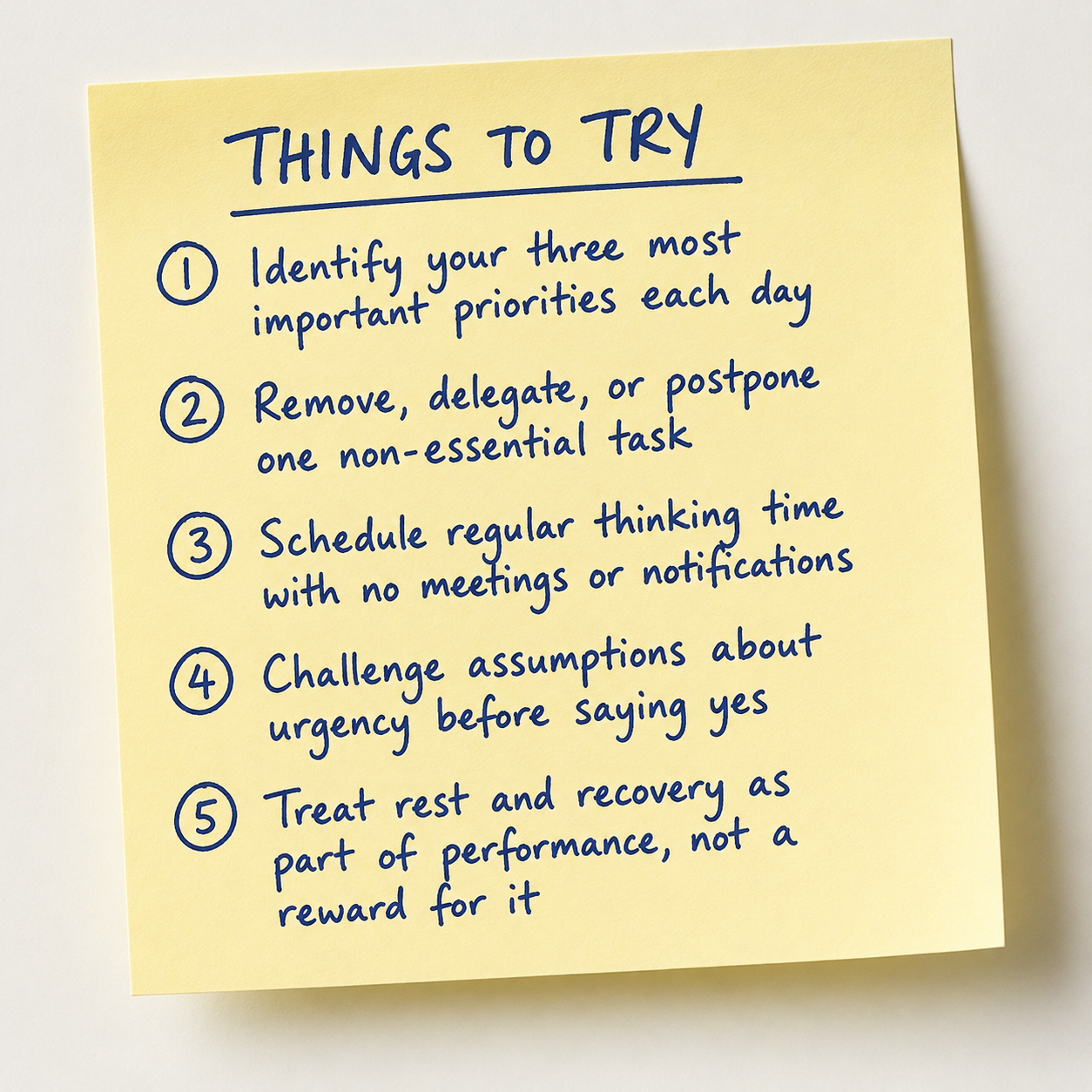
Start by identifying your three most important priorities: If today ended with only three meaningful things accomplished, what would they be? Most people carry dozens of competing priorities. Clarity starts by narrowing the field.
Look for something to stop doing: When we're busy, we often focus on how to do more, efficiently. A better question is whether some things need doing at all. Is there a meeting, report, commitment, or piece of work that could be delayed, delegated, simplified, or dropped?
Protect time to think: Many people spend their entire day reacting. Yet clear thinking rarely happens in between emails and meetings. Even thirty uninterrupted minutes can help you regain perspective.
Challenge the assumption that everything is urgent: Before responding to the next request, pause and ask yourself whether it is truly important or simply recent. Don’t confuse the two.
Treat rest periods and breaks as part of performance: Many people see rest as something they earn once everything is finished. But everything is never finished. Recovery isn't the reward for good performance. It's one of the conditions that makes good performance possible.
Making Peace with Unfinished Work
One of the most liberating realisations in modern working life is that there will always be more to do. There will always be another email, another project, another opportunity, another problem that needs solving. The most effective people aren't the ones who somehow manage to complete everything. They are the people who have become clear about what matters most and are comfortable letting some things wait.
That isn't poor performance.
It's good judgement.
A Question to Reflect On
What is one thing currently taking up your time and attention that feels urgent, but isn't actually important?
June 2026
Have you checked out the LeapSheet Library?
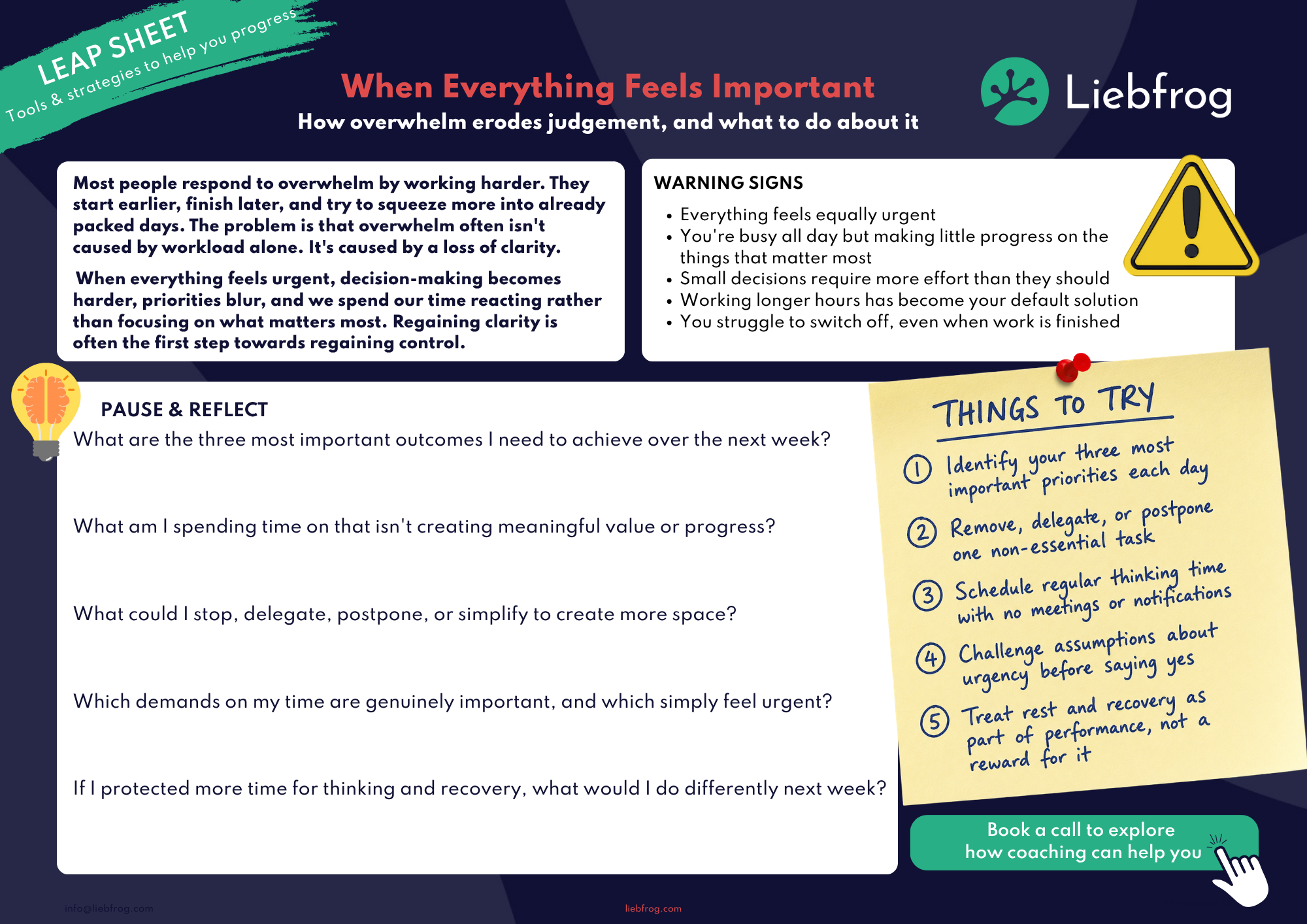
It is a growing collection of practical self-coaching tools designed to help you pause, think clearly, and make better choices at work and in your career. You can sign up for free and use whatever feels most relevant right now.
If it has been a while since your last visit, it is worth taking another look. We have added several new LeapSheets and introduced categories, making it much easier to find exactly what you need, when you need it.
If you’ve enjoyed this article and don’t want to miss future reflections and resources then do sign up for monthly newsletter.